People use the words Hajj and Umrah as if they are two versions of the same trip. They are not. They differ in when you go, what you do, how long it takes, and even in whether they are obligatory. If you are planning your first pilgrimage from the US, understanding the difference saves you money, time, and confusion. Here it is, simply.
A quick note: the rulings below reflect mainstream scholarship, and the schools of law differ on some points. For your own situation, ask a trusted scholar. The foundation for both pilgrimages is in the Qur’an: “And complete the Hajj and Umrah for Allah” (Surah al-Baqarah 2:196).
The simplest way to understand it
- Umrah is the “lesser pilgrimage.” You can perform it at almost any time of the year. The rite itself takes a few hours.
- Hajj is the “greater pilgrimage,” the fifth pillar of Islam. It can only be performed on specific days in the month of Dhul-Hijjah, once a year, and it unfolds over several days.
Which is obligatory?
Hajj is obligatory once in a lifetime for every Muslim who is physically and financially able. It is one of the five pillars.
Umrah is where scholars differ. The Shafi’i and Hanbali schools say it too is obligatory once for the able. The Hanafi and Maliki schools say it is a strongly recommended sunnah rather than a duty. Either way, its reward is immense, which is why so many Muslims perform it again and again.
What you actually do
Umrah has four steps:
- Enter ihram at the miqat with the intention and the talbiyah.
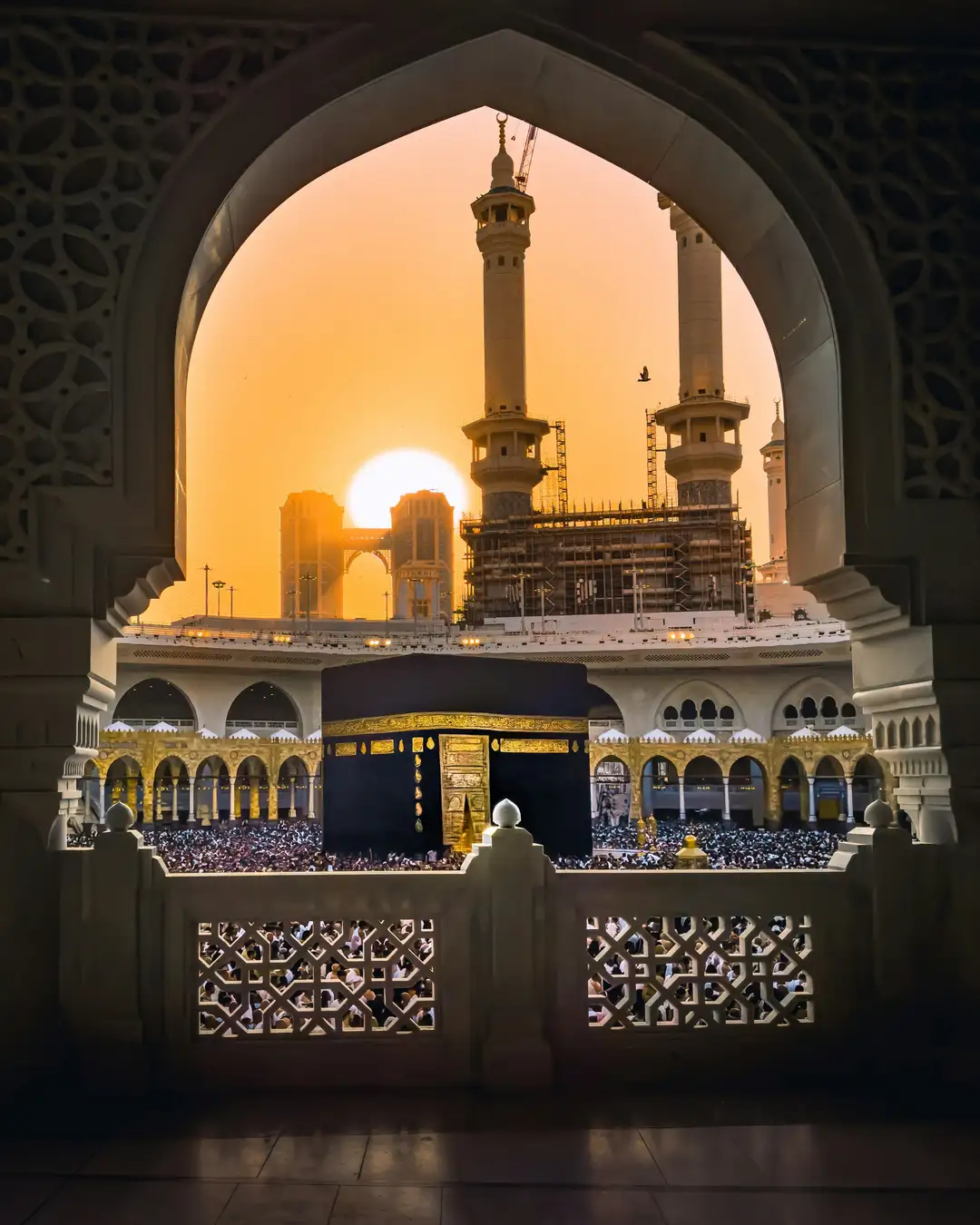
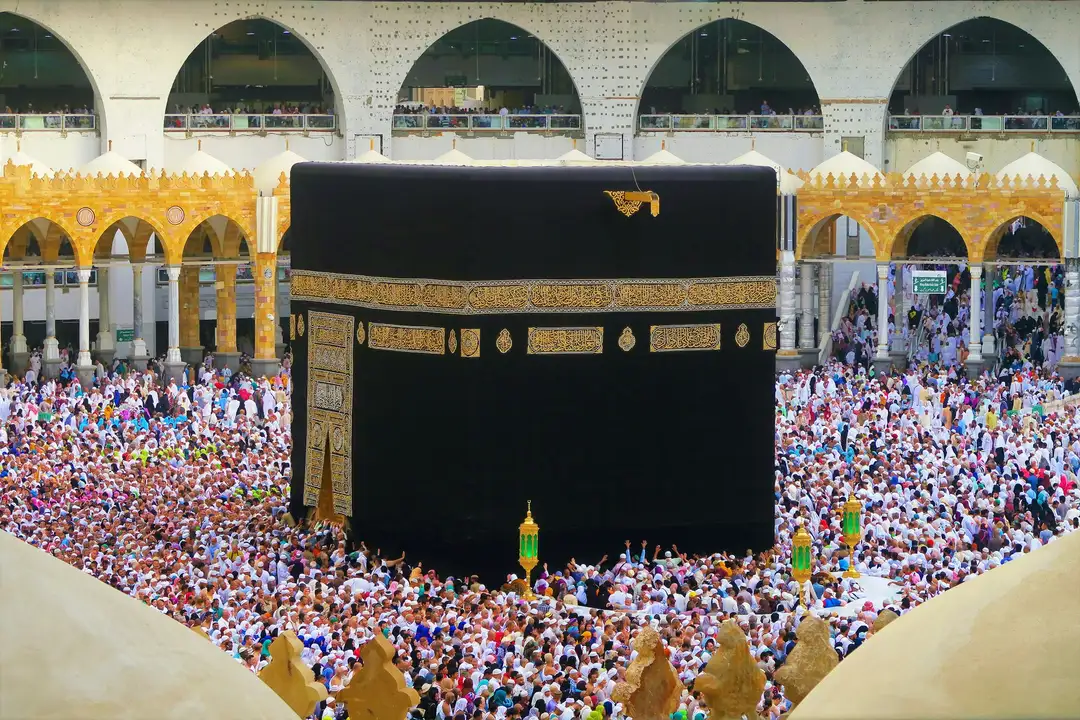
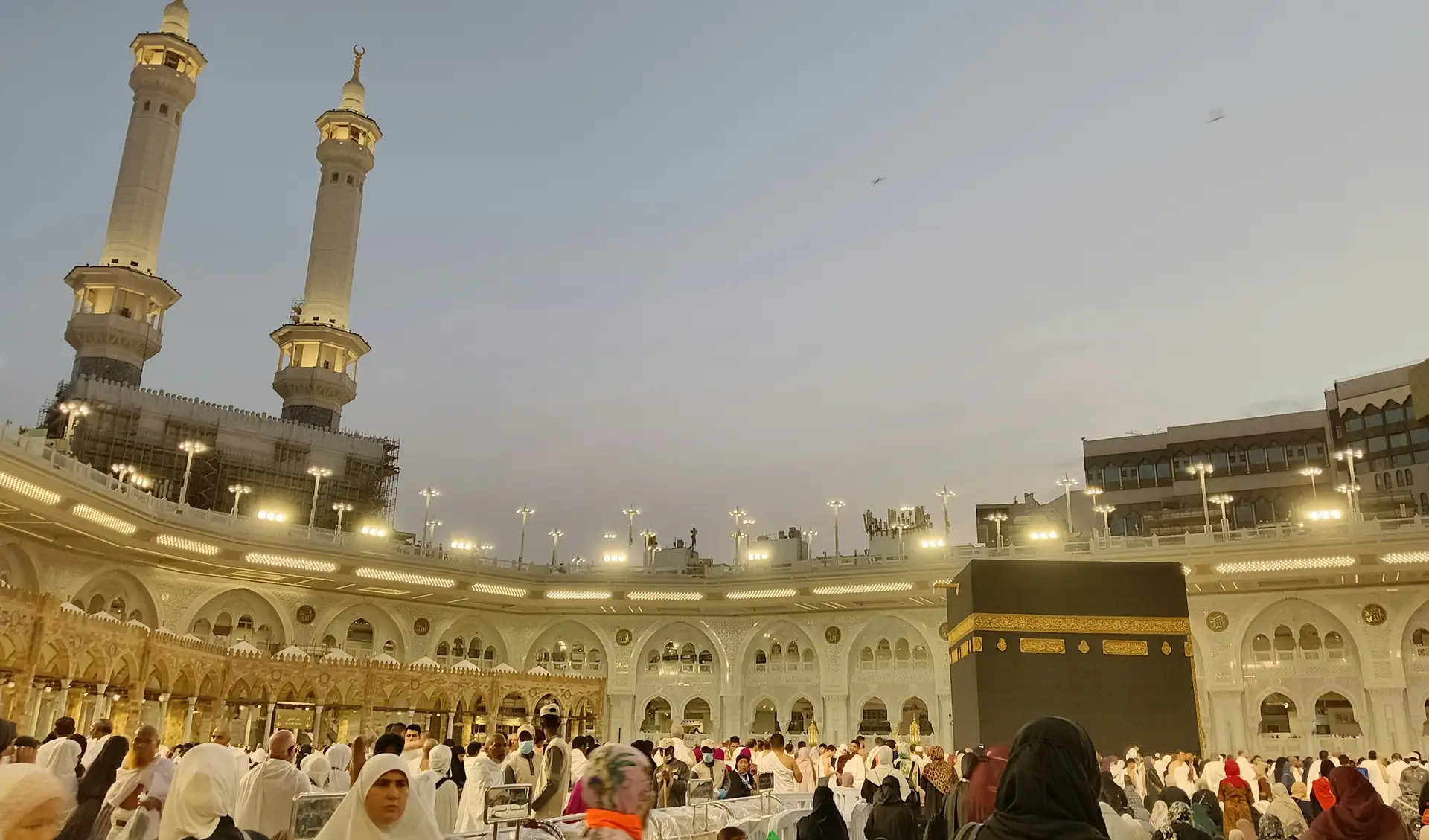
- Tawaf, circling the Kaaba seven times.
- Sa’i, walking seven times between Safa and Marwah.
- Cut or shave the hair, which releases you from ihram.
Hajj includes all of the above, plus the great rites of the season:
- Standing at Arafah, the heart of Hajj.
- The night at Muzdalifah.
- The days at Mina and the stoning of the pillars.
- The sacrifice (udhiyah).
That is why Hajj takes days and draws over two million people at once, while Umrah is quiet by comparison.
So which is harder?
Hajj, clearly. It is longer, far more crowded, and physically demanding, with long hours outdoors and a lot of walking across several days. Umrah is much gentler, which is one reason it suits first-timers, families, and older pilgrims. If you have never traveled for pilgrimage before, Umrah is the natural place to begin. Our guide on how many days you need for Umrah shows how light the schedule can be.
“Is seven Umrahs equal to one Hajj?”
This is a common belief, and it is not correct. There is no authentic hadith that seven Umrahs equal a Hajj.
What the authentic sources do say is beautiful in its own right: the Prophet, peace be upon him, told a woman that “Umrah in Ramadan equals a Hajj” in reward, recorded in Sahih al-Bukhari and Sahih Muslim. Scholars are clear this means equal in reward. It does not cancel the separate obligation of Hajj for those who are able. If you have the means and health for Hajj, it still must be performed.
Should you do Umrah or Hajj first?
There is no requirement to perform Umrah before Hajj. In practice, most pilgrims from the US perform Umrah first, for simple reasons:
- Umrah can be done any time, so you can go sooner.
- Hajj happens once a year and, since 2022, US pilgrims must apply through the official Nusuk Hajj platform, where places are limited.
- Umrah is a gentle way to learn the rites of tawaf and sa’i before the intensity of Hajj.
A warning worth repeating: no one can offer you Hajj on a tourist or Umrah visa. Hajj needs its own official Hajj permit. Be cautious of any agency that claims otherwise.
Where we fit in
We focus on Umrah for pilgrims flying from the US, with everything in one price: flights, the visa, hotels near the mosque, transport, and guided ziyarat. If this is your first pilgrimage, Umrah is the right and rewarding place to start.
To understand the reward you are seeking, read does Umrah forgive your sins. When you are ready to plan, see our Umrah packages or request a quote.