Umrah has four essential parts: ihram, tawaf, sa’i, and shaving or cutting the hair. Everything else in this guide is how to do those four well, in the order they come, with the words that go with them.
We have written it for American pilgrims, which means one detail most guides skip: you will usually enter ihram on a plane, not at a mosque.
Scholars differ on some details. Where the difference matters, we note it. For personal rulings, ask a scholar you trust before you travel.
Before you leave home
- Learn the rites now, not in the hotel lobby. Reading this twice and watching a video once is enough.
- Pack ihram in your carry on. Men need two white unstitched sheets and a belt. Women wear ordinary modest clothing, with the face and hands uncovered.
- Check your Nusuk permit. You need an Umrah permit in the Nusuk app for your time at Masjid al-Haram. We set it up with you before departure.
- Trim nails and remove unwanted hair before ihram, since you cannot do it afterwards.
Step 1. Ihram and the miqat
Ihram is the state you enter for Umrah. You prepare for it, you make an intention, and from that moment certain things become off limits until your Umrah is complete.
Preparing
- Take a full bath (ghusl) if you can, or at least make wudu.
- Men may apply unscented oil or perfume to the body before the intention, not to the ihram cloth.
- Men put on the two sheets: one around the waist, one over the shoulders. Sandals should leave the ankles and the top of the feet uncovered.
- Pray two rak’ahs if it is not a disliked time for prayer, or make the intention after an obligatory prayer.
Where the miqat is on your flight
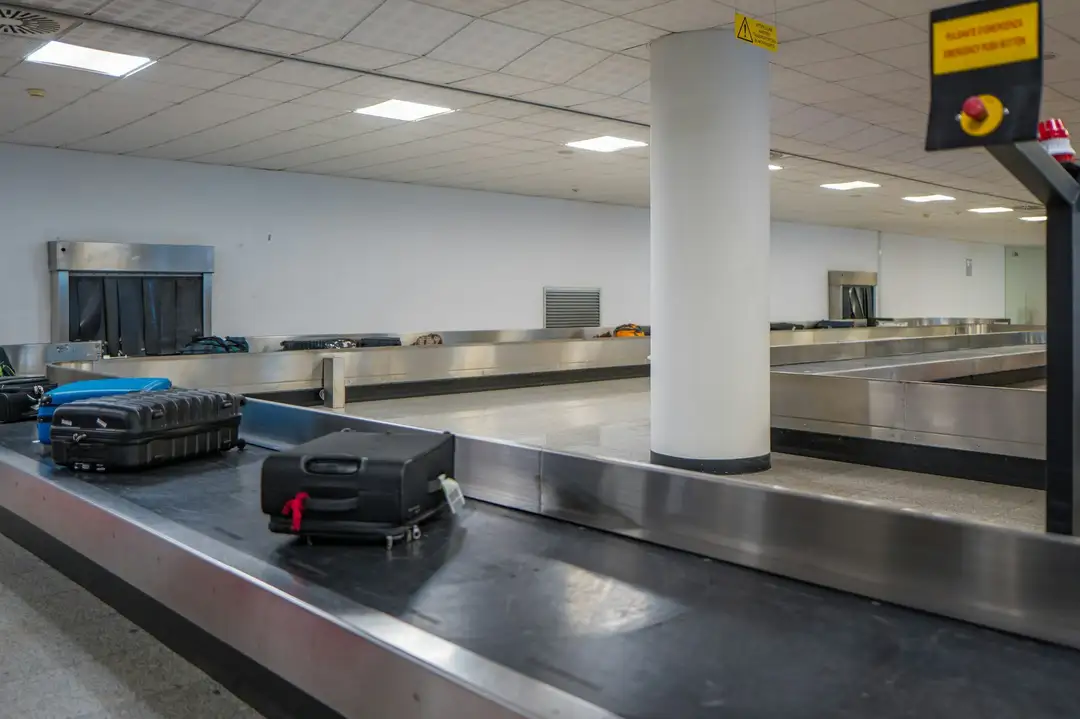
The miqat is the boundary pilgrims must not cross toward Makkah without being in ihram. Jeddah airport is inside the boundary, so if you are flying to Jeddah you must enter ihram in the air, before the plane crosses the miqat.
- Most airlines serving Jeddah announce the miqat around 20 to 45 minutes before it is crossed.
- Many men change at home, at the airport before boarding, or in the prayer room at their connecting airport. Changing in a plane bathroom is possible but cramped.
- Make the intention when the announcement comes, not before you board, so the restrictions start as late as possible.
If you are going to Madinah first, you do not need ihram on the flight. You will enter ihram later at Dhul Hulayfah (also called Abyar Ali), the miqat of Madinah, on the road to Makkah.
The intention
Say, with the intention in your heart:
لَبَّيْكَ اللَّهُمَّ عُمْرَةً
Labbayk Allahumma ‘umrah. Here I am, O Allah, for Umrah.
If you fear something may stop you completing Umrah, such as illness, you may add a condition:
اللَّهُمَّ مَحِلِّي حَيْثُ حَبَسْتَنِي
Allahumma mahilli haythu habastani. O Allah, my place of release is wherever You hold me back.
The talbiyah
Then begin the talbiyah, and repeat it often on the way to Makkah. Men say it aloud; women say it so they can hear themselves.
لَبَّيْكَ اللَّهُمَّ لَبَّيْكَ، لَبَّيْكَ لَا شَرِيكَ لَكَ لَبَّيْكَ، إِنَّ الْحَمْدَ وَالنِّعْمَةَ لَكَ وَالْمُلْكَ، لَا شَرِيكَ لَكَ
Labbayk Allahumma labbayk, labbayka la sharika laka labbayk, innal hamda wan ni’mata laka wal mulk, la sharika lak.
Here I am, O Allah, here I am. Here I am, You have no partner, here I am. All praise, all blessings and all sovereignty belong to You. You have no partner.
What is not allowed in ihram
For everyone:
- Perfume or scented products, including scented soap, wipes and deodorant
- Cutting or removing hair or nails
- Marital relations, and marriage contracts
- Hunting
For men: stitched clothing shaped to the body, and covering the head. For women: the niqab and gloves.
Accidentally breaking a restriction out of forgetfulness or ignorance is treated differently from doing it deliberately. If it happens, ask a scholar what, if anything, is owed.
Step 2. Entering Masjid al-Haram
Enter with your right foot and say:
بِسْمِ اللَّهِ، وَالصَّلَاةُ وَالسَّلَامُ عَلَى رَسُولِ اللَّهِ، اللَّهُمَّ افْتَحْ لِي أَبْوَابَ رَحْمَتِكَ
Bismillah, was salatu was salamu ‘ala rasulillah, Allahumma iftah li abwaba rahmatik. In the name of Allah, and peace and blessings upon the Messenger of Allah. O Allah, open for me the gates of Your mercy.
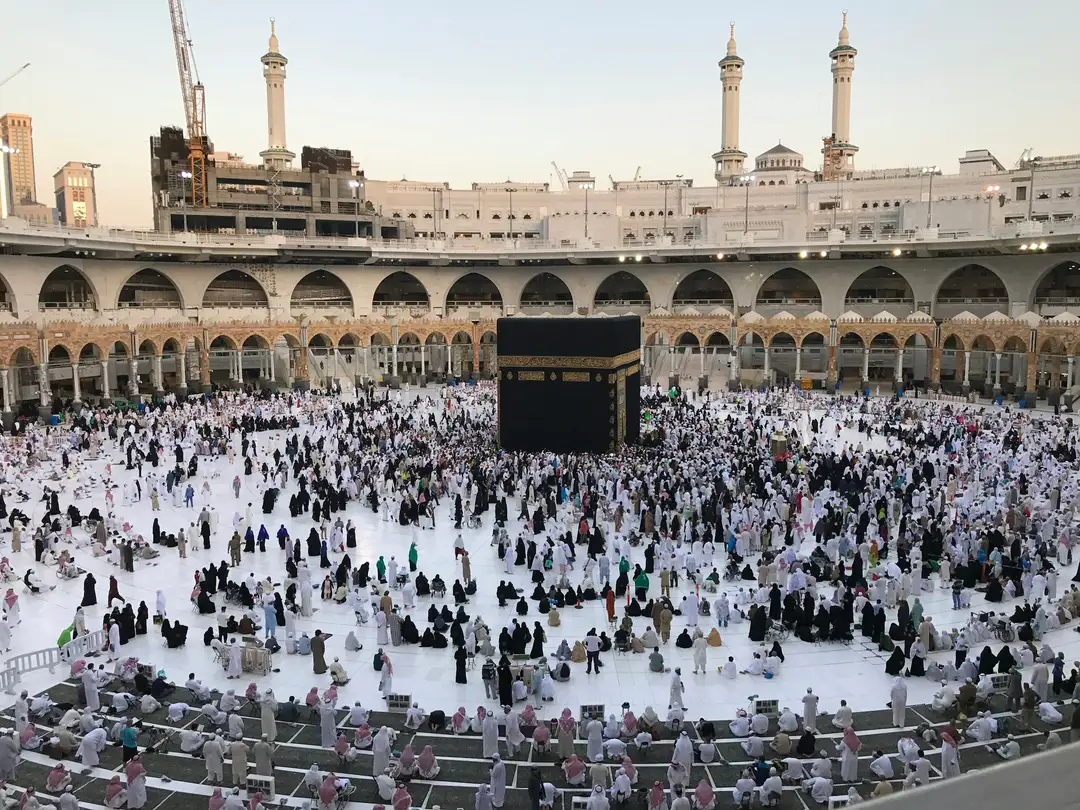
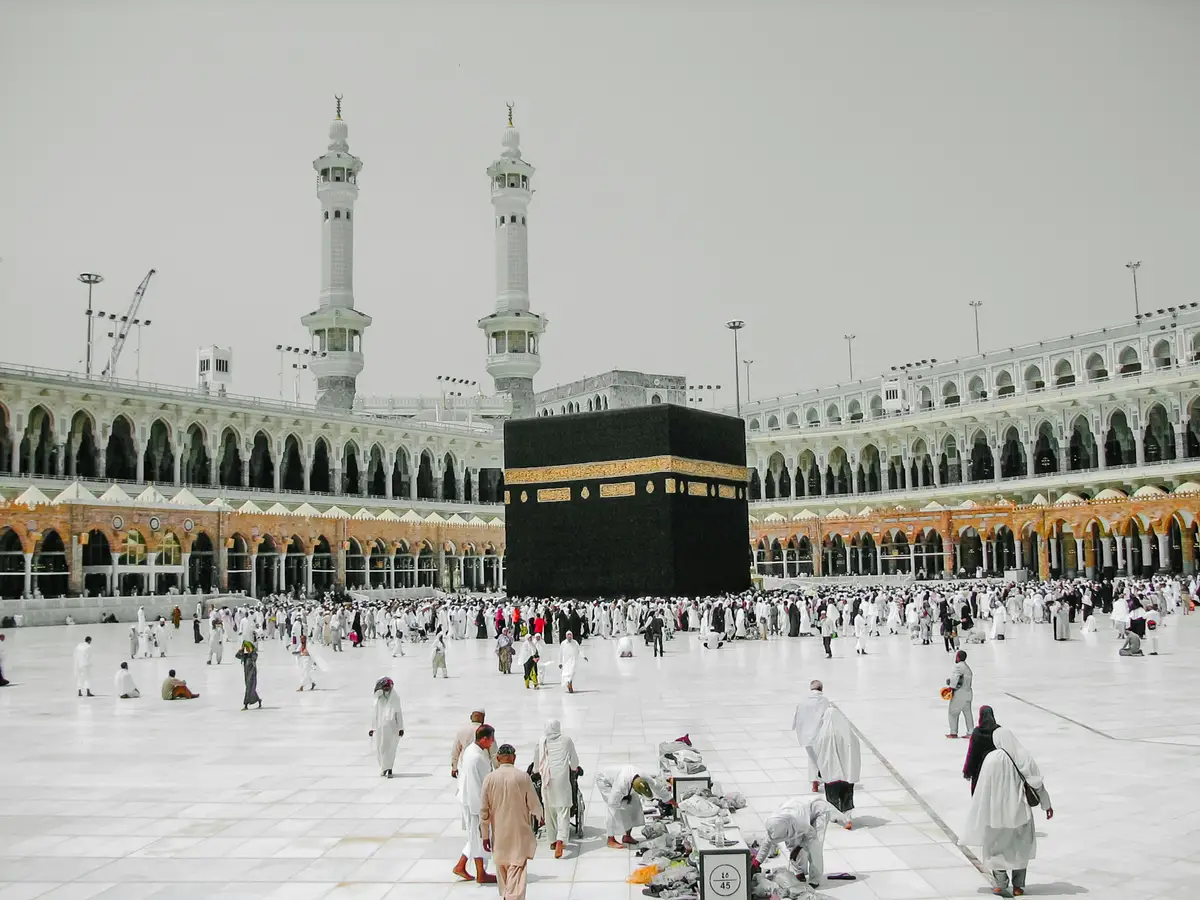
When you first see the Kaaba, take a moment. Make dua. This is a good place to stop reciting the talbiyah, which ends when you begin tawaf.
Step 3. Tawaf, seven circuits around the Kaaba
Before you start
- Make sure you have wudu.
- Men: uncover the right shoulder by passing the upper sheet under the right arm and over the left shoulder. This is called idtiba’. It is only for this tawaf, not for sa’i or prayer.
- Decide which level you will use. The ground floor, closest to the Kaaba, is shortest but busiest. Upper floors are longer circuits but calmer, and are where wheelchairs and electric carts go.
Where to begin
Tawaf starts in line with the Black Stone, on the corner of the Kaaba. There is a green light on the wall of the mosque opposite it to mark the line.
Face the Black Stone, raise your right hand toward it and say:
بِسْمِ اللَّهِ، وَاللَّهُ أَكْبَرُ
Bismillah, wallahu akbar. In the name of Allah, Allah is the Greatest.
You do not need to touch or kiss the stone. In today’s crowds, pointing is the Sunnah that most people can follow without hurting anyone.
The circuits
Walk counterclockwise, keeping the Kaaba on your left. Each time you pass the Black Stone line, one circuit is complete. Do this seven times.
- Men may walk briskly with short steps (ramal) in the first three circuits, if the crowd allows.
- Stay outside the curved low wall (Hijr Ismail). The area inside it is part of the Kaaba, and walking through it means that circuit does not count.
- Between the Yemeni corner (the corner before the Black Stone) and the Black Stone, say:
رَبَّنَا آتِنَا فِي الدُّنْيَا حَسَنَةً وَفِي الْآخِرَةِ حَسَنَةً وَقِنَا عَذَابَ النَّارِ
Rabbana atina fid dunya hasanah, wa fil akhirati hasanah, wa qina ‘adhaban nar. Our Lord, give us good in this world and good in the Hereafter, and protect us from the punishment of the Fire.
For the rest of each circuit, make your own dua in any language, recite Quran, or remember Allah. If you lose count, go with the lower number you are sure of.
Step 4. Two rak’ahs behind Maqam Ibrahim
After the seventh circuit, men cover the right shoulder again. Go toward the Station of Ibrahim, reciting:
وَاتَّخِذُوا مِن مَّقَامِ إِبْرَاهِيمَ مُصَلًّى
Wattakhidhu min maqami Ibrahima musalla. And take the Station of Ibrahim as a place of prayer. (Quran 2:125)
Pray two rak’ahs behind it if you can do so without blocking people doing tawaf. If it is too crowded, anywhere in the mosque is fine. It is Sunnah to recite Surah al-Kafirun in the first rak’ah and Surah al-Ikhlas in the second.
Then drink Zamzam. The coolers are throughout the mosque. Make dua as you drink.
Step 5. Sa’i between Safa and Marwah
Sa’i retraces the steps of Hajar, who ran between these two hills searching for water for her son Isma’il.
At Safa
As you approach Safa for the first time, recite:
إِنَّ الصَّفَا وَالْمَرْوَةَ مِن شَعَائِرِ اللَّهِ
Innas Safa wal Marwata min sha’a’irillah. Indeed Safa and Marwah are among the symbols of Allah. (Quran 2:158)
Then say abda’u bima bada’allahu bih, “I begin with what Allah began with.” Climb until you can see the Kaaba if possible, face it, raise your hands and say Allahu akbar three times, then:
لَا إِلَهَ إِلَّا اللَّهُ وَحْدَهُ لَا شَرِيكَ لَهُ، لَهُ الْمُلْكُ وَلَهُ الْحَمْدُ، وَهُوَ عَلَى كُلِّ شَيْءٍ قَدِيرٌ، لَا إِلَهَ إِلَّا اللَّهُ وَحْدَهُ، أَنْجَزَ وَعْدَهُ، وَنَصَرَ عَبْدَهُ، وَهَزَمَ الْأَحْزَابَ وَحْدَهُ
La ilaha illallahu wahdahu la sharika lah, lahul mulku wa lahul hamd, wa huwa ‘ala kulli shay’in qadir. La ilaha illallahu wahdah, anjaza wa’dah, wa nasara ‘abdah, wa hazamal ahzaba wahdah.
There is no god but Allah alone, without partner. His is the dominion and His is the praise, and He is capable of all things. There is no god but Allah alone. He fulfilled His promise, gave victory to His servant, and defeated the confederates alone.
Say this three times, making your own dua in between.
The seven laps
- Walk from Safa to Marwah. That is one. Marwah back to Safa is two. You finish at Marwah after the seventh.
- Between the two sets of green lights, men jog lightly. Women walk.
- At Marwah, face the Kaaba and repeat what you said at Safa, except the verse, which is only recited at the start.
- Make any dua you like during the laps.
Wudu is recommended but not required for sa’i. If you need a break, you may rest and continue.
Step 6. Shaving or cutting the hair
- Men: shaving the whole head is better. Shortening the hair evenly over the whole head is also valid. Cutting a few strands from one side is a common mistake.
- Women: gather the hair and cut about a fingertip’s length from the ends.
There are barbers near Marwah and around the mosque. Once this is done, your Umrah is complete and the restrictions of ihram are lifted. Change into your normal clothes.
Common mistakes we see first-timers make
- Crossing the miqat without ihram because they were asleep on the flight. Set an alarm based on the flight map, and change before you board.
- Starting tawaf away from the Black Stone line. Find the green light first.
- Walking inside Hijr Ismail during tawaf.
- Keeping the right shoulder uncovered during sa’i or while praying.
- Pushing to reach the Black Stone. Pointing from a distance fulfils the Sunnah.
- Believing a set dua is required for each circuit, and reading a booklet instead of speaking to Allah from the heart.
- Filming during tawaf. It slows the flow and pulls your attention away. Pilgrims on every forum ask others to put the phone away.
A practical timing tip
Right after Fajr and late at night are usually the calmest times for tawaf and sa’i. Midday in summer is quiet for a reason: the marble and the sun are punishing. If you are with elderly parents or children, plan around the heat and the prayer times, when the mosque fills and movement slows.
If you are planning your first Umrah and would like us to walk you through this on a call before you fly, that is part of every package. Request a quote, or read what to pack for Umrah next.