Finding out you are expecting, and wondering if you can still make Umrah, is a beautiful dilemma to have. The short answer is yes, many women perform Umrah safely while pregnant. But pregnancy does change how you plan the trip, and a little preparation makes the difference between a draining experience and a peaceful one. Here is what to know.
A note first: this is practical guidance, not medical advice. Every pregnancy is different, so your own doctor has the final word. For any religious question specific to your situation, ask a trusted scholar.
Is it allowed?
Yes. There is no religious barrier to performing Umrah while pregnant. The rites, tawaf, sa’i, and the rest, can all be performed, and if walking becomes hard, they can be done seated in a wheelchair. So the real question is not whether you may, but whether it is comfortable and safe for you right now, and that is a conversation with your doctor.
The safest time to go
Most doctors point to the second trimester, roughly weeks 14 to 27, as the easiest window. Early nausea has usually settled, your energy is better, and you are not yet close to your due date. The first trimester can bring sickness and tiredness, and the third trimester brings airline restrictions and more discomfort with all the walking.
Before you book: the health checklist
- Get your doctor’s clearance first. Ask specifically about flying, walking long distances, and travel to a hot climate.
- Vaccines. Saudi Arabia requires a meningitis (ACWY) certificate for the Umrah visa. Some vaccines are fine in pregnancy and some are not, so review the whole list with your doctor. Our meningitis vaccine guide explains the requirement.
- Travel insurance that covers pregnancy and overseas medical care. Confirm it covers your stage of pregnancy.
- Airline policy. Many carriers ask for a doctor’s letter after about 28 weeks. Check early and carry the letter.
Plan the trip around comfort
- Choose a hotel a short walk from the Haram. This one choice saves you the most energy, every single prayer. It matters even more when you are expecting.
- Travel off-peak. Quieter months mean smaller crowds and a calmer mataf, which is far safer and less tiring. See the cheapest, quieter times to go and Umrah weather by month to avoid the worst heat.
- Use the wheelchair or cart for tawaf and sa’i if you feel tired. It is completely permitted and widely used. You can hire a pusher or a self-drive cart at the Haram.
- Go at a gentle pace. Worship in the cooler early mornings and evenings, and rest in your room in between rather than staying out all day.
While you are there
- Drink water constantly and use the Zamzam coolers. Dehydration is the main risk in the heat.
- Eat carefully. Stick to freshly cooked, hot food and bottled water to avoid an upset stomach. Our tips on avoiding getting sick on Umrah apply doubly now.
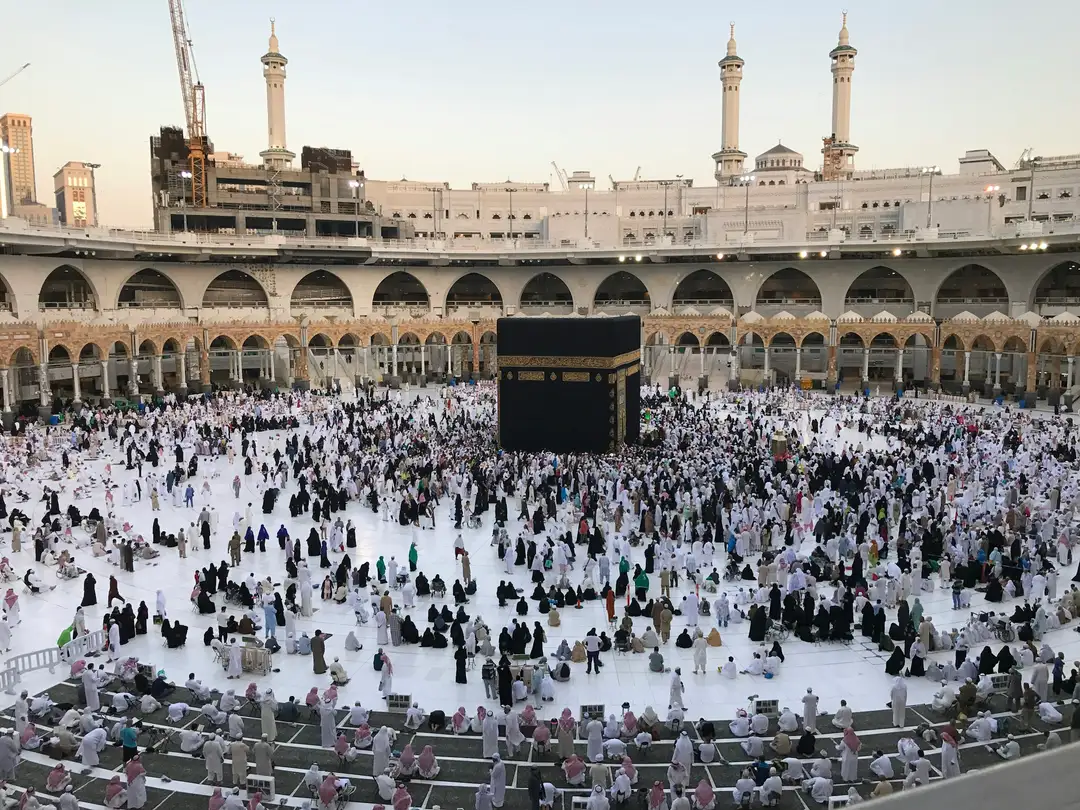
- Avoid the crush. Do not push into the busiest areas around the Kaaba. Perform tawaf on the upper levels or outer ring where it is calmer, even if each circuit is a little longer.
- Carry your documents and your doctor’s letter, and know where the Haram medical clinics are. They are well staffed.
Let us make it easy on you
If you are expecting, tell us. We will steer you toward a quieter travel window, a hotel close to the mosque, and arrange wheelchair support so you can worship without exhausting yourself. Travelling with a group also means help is always close by.
For a gentle, well-paced plan, see Umrah for elderly parents, which shares many of the same comfort tips, or request a quote and tell us your stage of pregnancy so we can plan around it.